Novels
Easter Miracle
2026 april 06
0
282
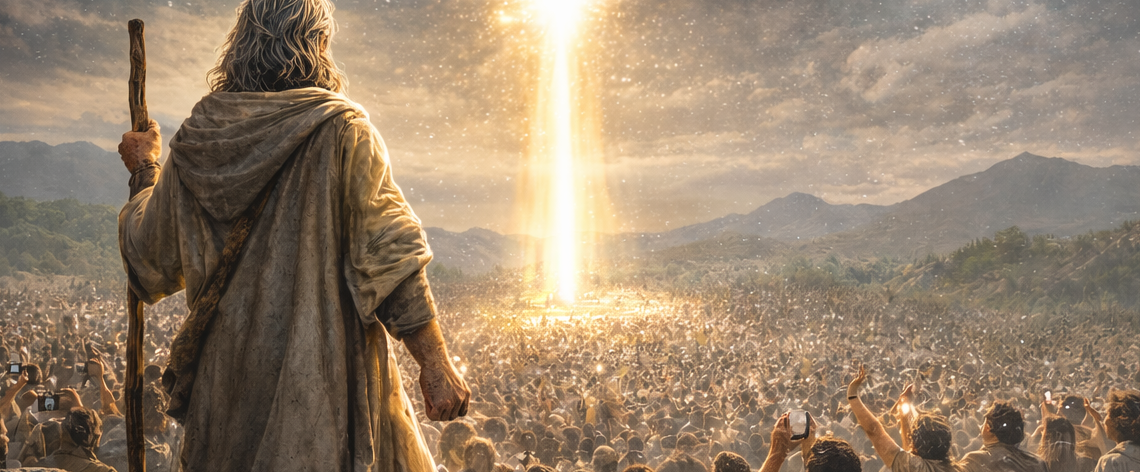
Sent Once More
“Go and try again to explain to the world what I have done for them. Return when you have fulfilled the task for which I send you. Be steadfast, and trust in Me as you always have.”
The voice was vast, filling the entire universe, yet no one heard it—only the one for whom it was spoken.
The name Eliyyáhu echoed through creation. Time halted. Powers converged and took form. Once more, a man set foot upon the dust of the Earth.
Present Day
Ben was scrolling through his phone in his room when his friends began roasting him again. They all knew he was in love with Amy, the most beautiful girl in their class. Amy, however, made it painfully obvious that she wanted nothing to do with him. She preferred the company of older, more dangerous boys.
“Buy her flowers and a stuffed bunny,” Joe typed in the Discord group. “She’ll definitely show you something in return.”
The chat filled with laughing emojis. Everyone knew Amy had outgrown plush toys long ago, and flowers would only embarrass her. Rumour had it she partied with adults now—who knew how far things went. Ben stood no chance. He was a nobody. A quiet, unremarkable boy whom girls barely noticed.
The worst part was that his friends knew he was romantic enough to actually buy her flowers. Courage, however, was another matter. He would never dare walk up to her and hand them over. The whole thing was doomed from the start.
Everyone knew it. Ben knew it too.
Yet hope and first love are a force against which reason stands helpless.
That evening, Ben swung his leg over his bicycle, ready to ride to a friend’s house for a gaming night, when he spotted a strange figure standing motionless in the middle of the road.
The man wore a faded white robe that reached his ankles, cinched at the waist with a simple cord. His feet were in old-fashioned sandals. Long hair fell past his shoulders, blending into a thick beard. He was lean yet powerfully built, and though clearly old, he carried an air of vigorous health that made him seem no more than fifty.
As Ben was about to pedal away, the stranger spoke.
“Peace be with you. Give me something to eat, for my soul is weary from the journey.”
His voice was warm and calm, the request gentle yet commanding.
Ben looked around, searching for anyone else the words might be meant for. But he knew they were addressed to him. Instinctively he wanted to flee—the situation felt too strange. People did not behave this way. Besides, there were no homeless men in his quiet neighbourhood.
“Eat…?” Ben echoed weakly.
“A little barley bread and goat’s cheese,” the man replied. “If you have none, a handful of lentils will do.”
Ben’s eyes widened. This man is not right in the head, he thought. Still, he did not want to be rude.
“I don’t have barley bread… I don’t even know what it is. Nor goat’s cheese…”
“Then perhaps you have dried figs or dates?” the stranger asked with the same serene kindness, as though this were the most ordinary conversation in the world.
The questions felt surreal in the quiet suburban evening. The man was natural, dignified, and strangely authentic—yet the sight of him standing there in white robes, asking for goat’s cheese at night, was almost grotesque.
“I’m sorry, sir… but are you a beggar?” Ben asked on impulse, then immediately regretted it as a spark flashed in the stranger’s eyes.
“I am no beggar, boy. I have come from very far away, and hunger torments me. It has been millennia since I last tasted food.”
Ben’s confusion deepened. Every instinct told him to leave, yet something held him there.
To his own astonishment, he invited the complete stranger into the small guesthouse behind their garden. He boiled sausages from the fridge and served them with mustard, ketchup, and white bread. The man ate with quiet gratitude.
That night Ben heard things that upended his world. The stranger claimed he had lived twenty-nine centuries earlier. He said he was the prophet Elijah, sent back to Earth by God’s command. He had come to speak with the Pope and the leaders of nations, because evil was tightening its net around human souls.
Ben was not religious. His parents were staunch atheists. Only one grandmother believed, and she visited once a year. Churches, priests, God—none of it belonged to his life. Yet somewhere deep inside there remained an openness. The stranger was bewildering, almost absurd, yet Ben felt an inexplicable closeness to him, as though he were listening to a truth from another age that somehow still spoke to the present.
Old World, New World
Elijah soon realised that gaining an audience with the Pope, the American President or any world leader was impossible. So he left the city and found a rocky, hilly site outside town—the remains of an old open-pit mine. Nature had softened its edges with grass and shrubs, but it still resembled a crater.
Ben followed him. Elijah examined every tree and bush, but found nothing edible. When Ben begged him not to stay alone in the open, Elijah refused to yield. In the end Ben promised to bring him food each day.
Most of the time Elijah sat in silence—meditating, thinking, praying. He spoke with Ben only when the boy came, and only until he had to leave.
Word of the visits spread quickly. First his friends questioned him, then his parents, then strangers. Soon people began coming out of curiosity, bringing food. Elijah received each visitor with warm kindness and spoke to them patiently—whether they came with interest, scepticism, or the desire to mock.
Even Ben’s parents went once. They began with polite conversation, but when Elijah learned who they were, he spoke with unflinching directness: they must repent. If they wanted lives of real value, they must seek God and pray for grace, for the Kingdom was near. They promised him everything on the spot. Ben could scarcely believe it. Elijah looked sorrowful, as though he already knew the promises were empty.
Afterward they argued with Ben, saying he was wasting his time. But as crowds gathered and Ben appeared in news reports, their complaints grew quieter.
In time the visitors became a multitude. Supporters built Elijah a simple shelter and a stage with sound equipment. His teachings spread across the internet. He spoke with clarity and elegance, yet always returned to the same message:
“Repent, for the Kingdom of God is near. Do penance, so that Easter may truly bring new life to all.”
The Teaching
Ben soon discovered something astonishing. Although Elijah had spoken ancient Hebrew in his own time, he understood English when speaking with Ben. Even more remarkable: people who asked questions in any language heard his answers in their own tongue. The miracle was unmistakable when experienced in person.
Yet when the speeches were recorded, they played back in only one language.
Technology does not bear witness to miracles.
Those who truly wanted to know had to come in person. Television crews arrived, but they could never capture the phenomenon on screen. The little crater slowly transformed into an improvised festival ground, filled with giant screens, powerful speakers, and ever-growing crowds—sometimes more than a million souls.
Ben noticed Elijah growing visibly weary. He created a schedule, built a website and an app, and arranged security when the gatherings became too large. As always, opposition soon appeared. One day a small group began shouting, cursing, and throwing things at the prophet while he spoke. Elijah paid them no attention. Ben, however, felt a deep unease as curiosity and joy were joined by sudden, inexplicable malice.
The Preparation
The world’s major media outlets agreed to organise a special live event on Holy Saturday. Reporters from every language would ask questions, hoping to determine whether this was deception or a genuine miracle.
When Ben told Elijah, the prophet smiled faintly.
“Wherever God pours out grace, the evil one appears also—to devour the falling crumbs of souls—and he always begins with lies.”
He looked up at the sky.
“I was sent to tell them: Easter is near. Let them come.”
The preparations were immense. The website and app had to be moved three times because of overwhelming traffic. Within a day of the announcement, seven hundred million people indicated they would watch the broadcast.
Elijah’s only reply was:
“Blessed are those who believe by God’s grace. Yet every lost sheep must be sought while the wolves howl outside… It is worth it to see gratitude in the eyes of the rescued.”
Holy Saturday
An unprecedented crowd filled the crater. Some later claimed there were twenty million people present.
Thirty cameras. Thirty languages. Thirty reporters stood before the stage where Elijah sat, his staff—carved by Ben months earlier—resting firmly in his hand. The giant screens and sound system reached even the farthest spectators. Online, the audience reached one billion.
Ben moved among the crowd with the ease of a seasoned organiser. During the final briefing he noticed that in the reserved section for his friends sat not only the three boys, but Amy as well.
His heart leaped. Elijah noticed at once. He placed his large, strong hands on Ben’s shoulders and said quietly:
“You are a good man, my son—better than you know. Your life will not be easy, but this girl is not for you. True love will find you soon, and you will be happier than you can now imagine.”
At first Ben felt stung. Then the words brought unexpected relief. He realised the prophet had spoken not to wound him, but to protect him. A few minutes later, he felt only gratitude.
Each reporter had two minutes. Elijah could answer as long as he wished. Most asked with genuine curiosity. Then an older man in thick black-rimmed glasses and a pure white suit spoke for the first time.
“Would you tell us why you are deceiving humanity?”
The question cut through the air like a blade.
Elijah looked down briefly, then raised his eyes.
“I see you have arrived… You are here as well.”
Silence fell.
The reporter bristled. “What is that supposed to mean?”
Elijah answered with calm authority:
“You tried this same trick already in Eden, when the lie lay hidden inside the question itself. If you accuse, prove it. Do not slander. We are not equals while He is with me—and He is always with me.”
The exchange sharpened. The reporter mocked Elijah’s age, his laws, his irrelevance in a Christian world. Elijah replied without raising his voice, yet with deepening intensity:
“Look around you. Hundreds of millions are watching and listening. Truth does not age. The Law was not abolished—it was fulfilled. And the One who sent me chooses not according to eras, but according to the heart and the soul.”
When the reporter demanded undeniable proof and accused him of illusion, Elijah stepped down from the stage. He walked to a large rock jutting from the ground, raised his staff, and drove its end deep into the stone.
A blinding flash of lightning tore across the cloudless sky, followed by a thunderclap of terrifying force.
Elijah returned and sat down.
Nothing seemed to happen.
The reporter laughed—a cold, mocking sound.
“So that was your miracle? A cheap trick? Any mediocre magician could do the same. Even your robe is unconvincing. A costume proves nothing.”
Elijah rose and spread his arms.
“Pray, and ask God for the grace that enables you to believe. Do not wait for signs, for the signs have already been given—long ago, today, and in this very hour.”
He lifted his face to heaven and cried out:
“He is risen! He has always been with you, and He will remain with you even if you do not believe.”
At that moment, a powerful jet of water burst from the rock. The crowd gasped and rose to its feet in wonder.
Then a single shot rang out.
Elijah collapsed. A small wound appeared on his forehead.
Before his body touched the ground, a brilliant shaft of light erupted upward from the exact spot, piercing the sky and vanishing beyond the atmosphere.
The giant screens showed only the light.
When the light disappeared, Elijah’s body was gone.
For one frozen moment the entire world seemed to hold its breath.
Easter
Ben was shattered by the prophet’s departure. What hurt even more was the world’s reaction the next day. Most broadcasters deleted their footage. Private recordings were dismissed or removed from platforms. The shooter was arrested, then released—there was no body, and under modern law nothing could be proven beyond doubt.
Elijah’s robe was examined and found to be at least 2,800 years old. Experts spent weeks debating how such fabric could exist.
On Easter Sunday the rock was crushed by heavy machinery, yet the water continued to flow—unstoppable, powerful. Some called it poison. Others said it was holy. Many who washed in it claimed healing. Some tried to sell it and later died in accidents. Eventually the area was sealed off and declared dangerous.
Ben often replayed the recordings. When he reached the final words, he smiled through his sorrow.
“Jesus, the Son of God, performed hundreds of miracles. Yet those who did not wish to believe explained even those away. To the one without faith, the greatest sign is merely an illusion to be dissected.”
And then the closing words:
“Pray for the grace that allows you to believe. Do not wait for miracles—the miracles have already happened, long ago, today, and even now.
He is risen.
He has always been with you,
and He will be with you even if you do not believe.”
The miracles have already happened.